



The committee wants the monthly FAAC meeting should be weekly to curb financial volatility
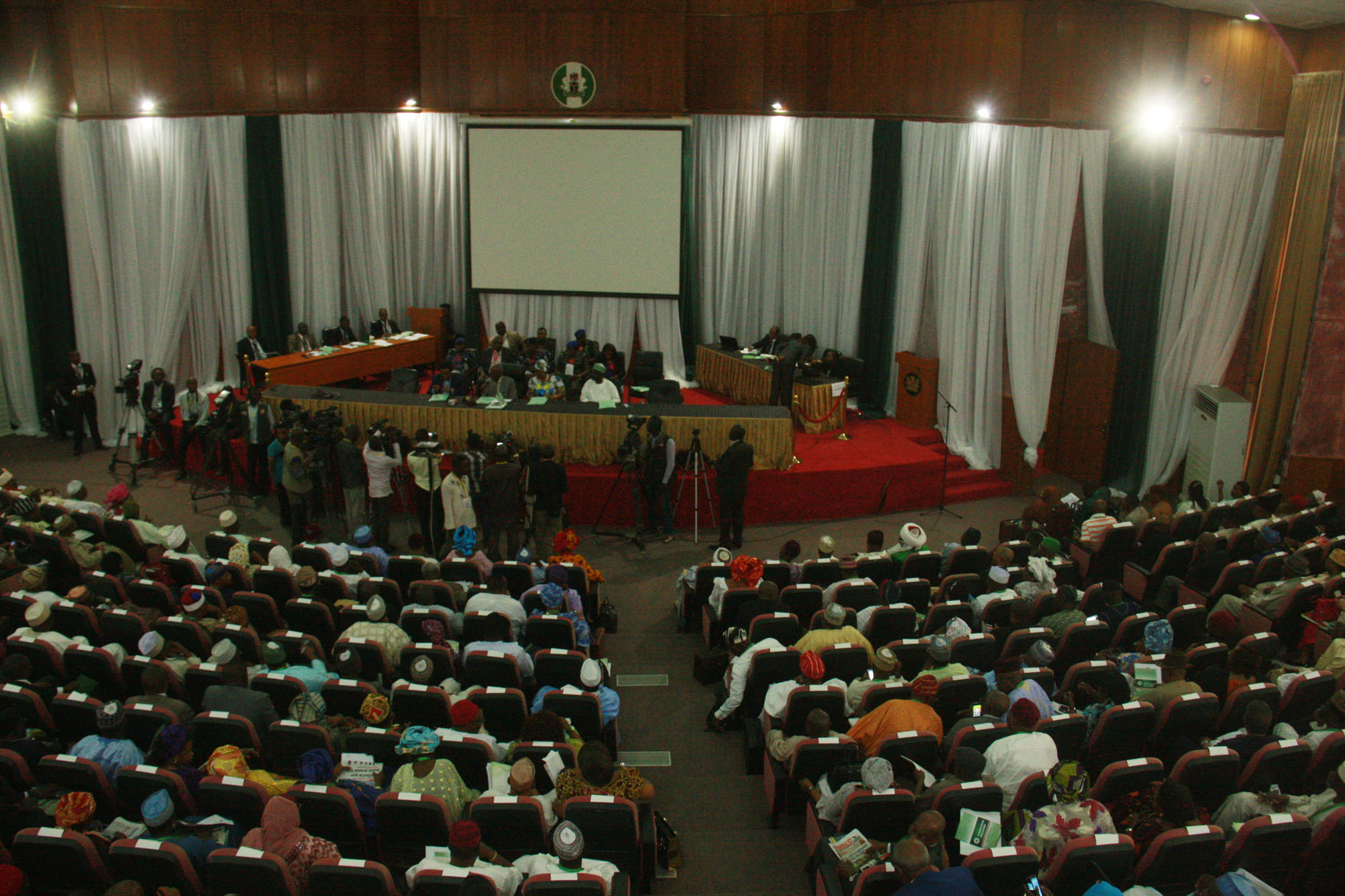
The committee on Economy, Trade and Investment at the ongoing National Conference, has proposed a drastic restructuring of the Nigerian economy from being consumptive to being a productive and people-centred economy.
The committee said to reposition the economy for growth urgent steps should be taken to amend the relevant sections of the 1999 constitution.
With the amendment, all appropriation bills sent to the National Assembly by the president, or state Assemblies by the governors, must be accompanied by the Medium Term Plan or Plan compatibility statement detailing deviations from the previous year’s budget implementation.
Besides, the committee proposed the enactment of the National Revenue Bill every year prior to the Appropriation Act, to ensure that any excess revenue beyond that in the Act be retained in the Federation Account and not distributed among the three tiers of government.
Such retained excess revenue, the committee said, should be used exclusively to finance capital projects and programmes included in the next year’s budget.
To ensure effective implementation of the proposed arrangement, the committee said the National Planning Commission be converted to Federal Ministry of Planning and Economic Development, with the Vice President as the minister.
Equally, the Budget Office of the Federation should be returned to the Ministry of National Planning and Economic Development.
The committee called for the monthly Federation Accounts Allocation Committee, FAAC, cycle to be changed to weekly to check the volatility associated with wholesale liquidity withdrawal of revenue by the Nigerian National Petroleum Corporation, NNPC for the monthly meetings.
“Government fiscal operations associated with the management of FAAC produce devastating shocks, which adversely affect interest rate administration, exchange rate stability and control of inflation,” the committee noted.
The committee traced these shocks to the commercial banks that serve as revenue collection agents for the NNPC, by keeping the revenues collected till the end of the month before paying the Central Bank of Nigeria, CBN in bulk.
It said because of the huge volume of the revenues involved, the financial system usually suffers from perennial shortages, which raise interest rates during the period.
“After the sharing of the revenue during FAAC, the share of the states and Local Governments returned to the system causes excess liquidity, resulting in speculative attacks on the Naira and putting pressures on the exchange rate,” the committee noted.
To mop up the excess liquidity, it said the CBN usually issues treasury bills at high interest rates through the open market operation, OMO, pointing out that the monthly FAAC allocations and patterns of disbursements were a major cause of excess liquidity and short term interest rates swings in the money markets.
The situation, as currently managed, the committee noted, was responsible for the high cost and inadequate supply of financing to both private and public sectors investments as well as instability in the macro-economic stability in the country.
On cost of governance, the committee noted that the high cost was adversely impacting on the utilization of public resources and its overall development, as the bulk of the annual budget is spent on recurrent expenditure, leaving little or nothing for capital projects.
To redress the situation, the committee recommends a drastic cut in the number of political appointees and aides, while elected members of the legislature at all levels of government should be made to serve on part-time basis.
Similarly, ministries, departments and agencies, MDAs should be streamlined to avoid duplication of functions and unnecessary cost outlay, while government must ensure strict compliance with the procurement Act in the award of contracts to avoid high projects costs.