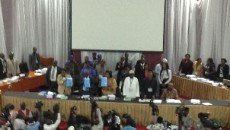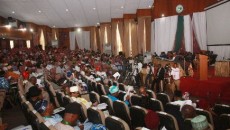
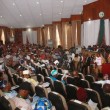

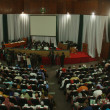

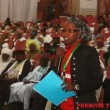
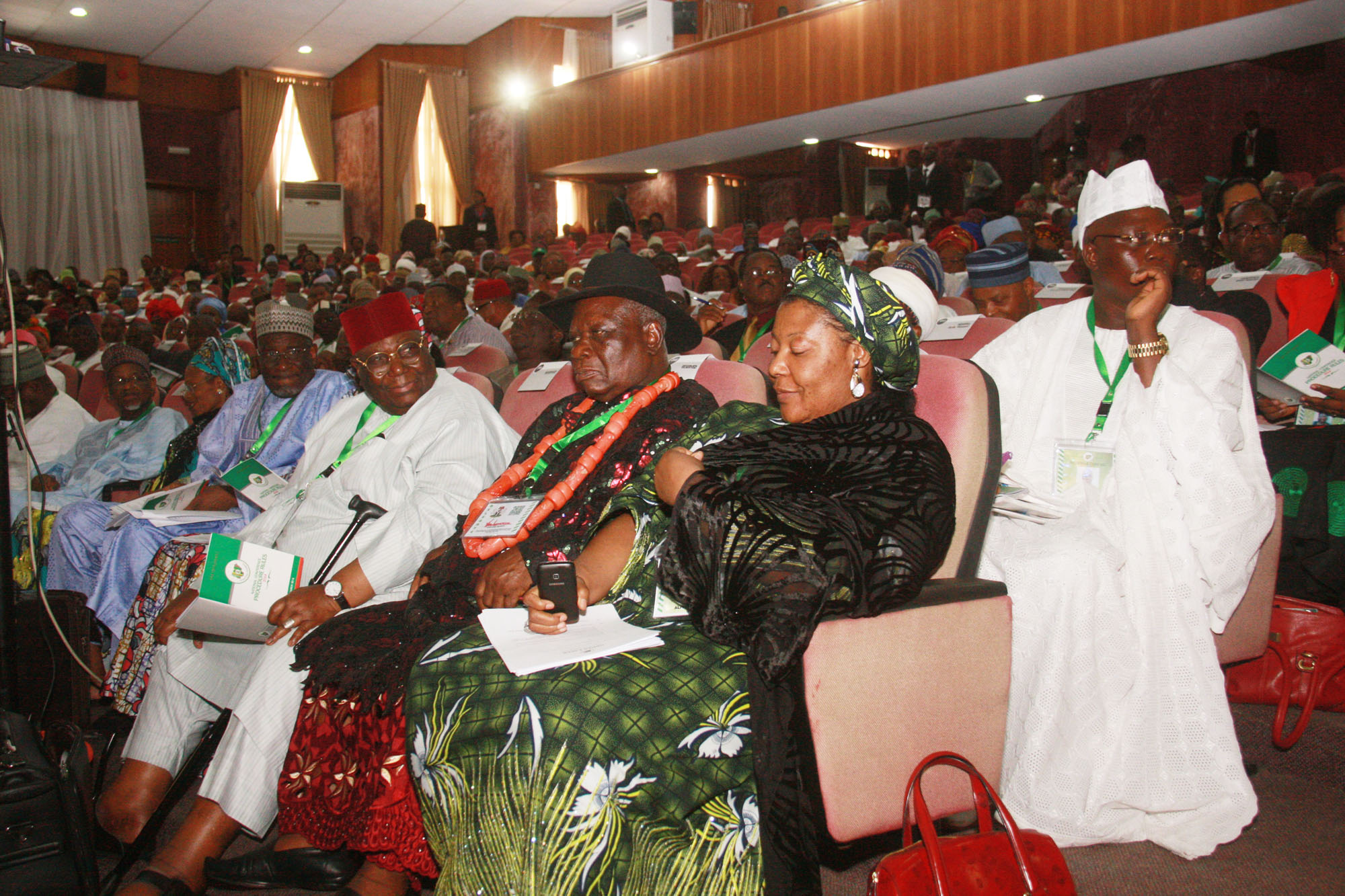
The delegates at the National Conference have approved the establishment of 20 standing committees for the conference.
The delegates were also told that the Federal Government has given approval to the leadership of the National Conference to rent 10 additional halls outside the National Judicial Institute, NJI, to accommodate the committees.
The draft work plan and the list of amended standing committees for the conference were adopted during plenary sitting on Monday.
The Conference Secretary, Valerie-Janette Azinge, communicated the government’s approval to delegates, while debates were on-going, to adopt the draft standing committee list.
Mrs. Azinge, who spoke on the backdrop of calls by delegates for many committees to be merged, noted that the Conference venue had only 10 halls and would not accommodate all the committees to be constituted.
“Distinguished and honourable delegates,” Mrs. Azinge began, “I wish to bring it to your notice that the Federal Government has approved that we rent 10 additional halls outside this facility to accommodate the meetings of our committees. There are only 10 halls within these premises and they will not be enough; given the number of committees we intend to set up for the work of the Conference. I wanted to let you know that we have secured the permission to get more meeting halls for the job we are expected to do here.”
After exhaustive debates, Otu Duke, a South-South delegate, moved the motion that the amended list of committees be adopted to include the suggestions of members. The motion was seconded by Asabe Nahaya, a representative of the National Association of Women Journalists, NAWOJ.
Before the adoption of the list, many delegates had called for the merger of some of the committees proposed by the Conference.
In his contribution, a delegate, Gambo Laraba, argued that education has not been accorded the attention it deserves at the Conference.
She said, “Education will determine the success of this country and it is imperative that government takes serious responsibility for the educational sector. While I am not totally against the privatisation of education, I know that by the time we wake up, we will realise that we have missed so much.”
She, therefore, canvassed that Nigeria should pursue need-based educational policy and called on the Conference to include that as one of its key agenda.
Aisha Ismail said some of the most pressing issues bedeviling the country had not been given due attention. She pointed out that corruption was responsible for the country’s poor outing on all fronts, adding that the Conference should look at ways of curbing corruption.
She said, “Corruption has killed everything in the country. We have a collapsed agriculture, collapsed housing sector, collapsed health sector. I think that corruption should be made an item and not just dumped into some other issues.”
Modibo Kawu, in his contribution, argued that the choices the country has made since Independence is responsible for the dismal state of the national economy. He lamented the loss of millions of jobs in the textile industry and other key sectors of the economy due to poor decisions of the country’s leadership and called on the Conference to take a deeper look at the economy of the country.
“From 1999 Nigeria has been selling its national assets to government cronies. I suggest that we start interrogating the choices we make in this country,” he said.
Mike Ozekhome said the media was so critical for national development and should not be hidden under the committee on science and technology. He said Section 22 of the Constitution empowered the media to hold the government accountable to the people of Nigeria.
“With due respect my Lord,” he began, “I submit that the media be brought in line with committee 11.”
Peter Izon argued that Nigeria has no known economic philosophy, adding that this was responsible for the nation’s economic woes.
“We must capture the necessary linkages to attain development. We must not necessarily need to increase the number of committees but we can restructure the committees to address very important economic issues,” he said.
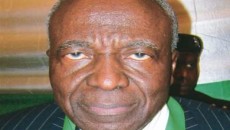
Debates on the floor of the Conference were largely peaceful although some delegates still screamed and murmured when they disagreed with the position taken by the majority. Mr. Kutigi at a point threatened to order a delegate out of the chamber for disorderly conduct.
He cautioned that the Conference Rule has empowered him to send out a delegate who does not act with candour and decorum on the floor.