




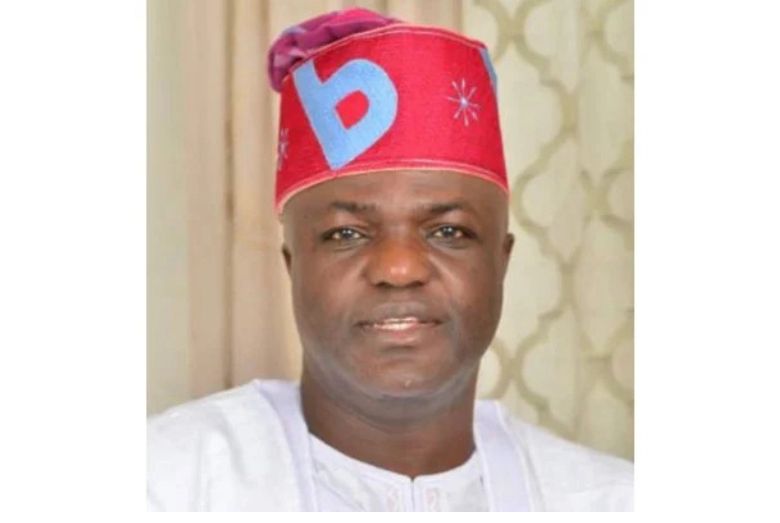

The chairperson of the House of Representatives Committee on the Independent National Electoral Commission (INEC), Adebayo Balogun, said Tuesday that a bill seeking the reduction in election litigation timelines has passed second reading.

Mr Balogun, who appeared as a guest on Channels Television’s programme, ‘Politics Today’, said that the bill also aims at removing the “Powers to determine the timeline from the constitution,” and placing it in the Electoral Act.

|

|
He explained on Tuesday evening that this would enhance INEC’s efficiency and minimise legal uncertainty.
“What we are trying to do now is to reduce the tribunal period to ninety days and the appeal to 50 days, that gives us 150 days. Then you have 21 days for filing the petition and 14 days for filing the appeal. By the time we put all these numbers together, we are looking at 185.”
|
|
|
|---|
The current regime sets 180 days for the election petition tribunal alone, from the day of filing of the petition to judgement, and 90 days for the Court of Appeal. That gives a total of 270 days for full litigation.
Governorship election petitions that can be litigated on three levels require longer period. The Supreme Court has up to 60 days from the day of filing of such an appeal to give judgement. This means that total length of time for exhausting the legal process in a governorship election case can stretch to 330 days – that is almost a year.


Mr Balogun, who represents Ibeju-Lekki Federal Constituency of Lagos State, said the goal of the 185-day limit on elections is to allow enough time to conclude all legal challenges before the swearing-in.

Stay Ahead with Premium Times
Follow us on Google News and never miss breaking stories, investigations, and in-depth reporting.
 Add as a preferred source on Google
In April, INEC called for the reform of the Electoral Act as well as the constitution in preparation for the 2027 general elections.
Mr Balogun told PREMIUM TIMES in July that the electoral reforms in the National Assembly are targeted at expanding inclusion, strengthening internal democracy, and enhancing public confidence ahead of Nigeria’s 2027 general elections.
READ ALSO: Female lawmakers, UN push for reserved seats for women in Nigerian legislative houses
He also called for a bill to establish tighter timelines to eradicate frivolous cases.
He revealed plans to integrate the National Identification Number (NIN) into the voter register and reduce reliance on the Permanent Voter Card (PVC).
However, on Tuesday evening, Mr Balogun noted that this would not be possible due to a shortage of time in getting the National Identity Management Commission (NIMC) on board before the elections.
Discover more from Premium Times Nigeria
Subscribe to get the latest posts sent to your email.

More News


![President Bola Tinubu stepping out of the plane [PHOTO CREDIT: Asiwaju Bola Ahmed Tinubu on Facebook]](https://i0.wp.com/media.premiumtimesng.com/wp-content/files/2024/02/355346668_271952128743471_8548802871641607844_n.jpg?fit=1440%2C1025&ssl=1)


