






Mordecai Jim is the health worker in charge of the Primary Healthcare Centre (PHC) in Odorikot, a community in Ikot Inyang Okop in the Mkpat Enin Local Government Area of Akwa Ibom State. Every Wednesday morning, Mr Jim takes an hour-long motorcycle ride to Ikot Akpaden, the community that hosts Akwa Ibom State University, to get ice-block-preserved vaccines for immunisation of newborns at his facility, which does not have a refrigerator for the storage of the vaccines.

The situation at the Odorikot PHC reflects what you would find at many PHCs in oil-rich Akwa Ibom State, where many residents are cut off from essential care because PHCs lack essential equipment, drugs, doctors, electricity, pharmacies, or laboratory technicians.

|

|
The road to Mr Jim’s facility is nearly impassable. Despite physical upgrades and modern beds, the health centre’s standard falls far short of the recommendations of the National Primary Health Care Development Agency (NPHCDA).

The agency considers functional PHCs fundamental for achieving Sustainable Development Goal 3 of the United Nations, which aims to reduce preventable deaths among newborns and children under five and ensure universal health coverage (UHC).
|
|
|
|---|
According to the NPHCDA, a PHC should be accessible by road, fenced, and guarded. It should also have a stable power and water supply, accommodation for staff members, and essential medical equipment and drugs.
It should operate 24 hours a day and offer the five minimum services, including treatment for communicable and non-communicable diseases, maternal and newborn health and nutrition care, health promotion/social mobilisation, and laboratory services.


The staff should consist of a medical officer, a nurse/midwife, a community health worker, a pharmacy technician, a medical laboratory technician, an environmental health officer, a health record technician, and five other support staff members.

Stay Ahead with Premium Times
Follow us on Google News and never miss breaking stories, investigations, and in-depth reporting.
 Add as a preferred source on Google
Sadly, this is not the reality of PHCS in Akwa Ibom communities.
During PREMIUM TIMES’ visit to the Odorikot PHC on 21 May, a mother who arrived with her newborn for vaccination at 1 p.m. was turned back because the ice blocks preserving its vaccines had melted, rendering them ineffective.
PHCs’ below standard
PREMIUM TIMES visited the PHCS in Mkpat Enin, Eastern Obolo, and Oruk Anam local government areas and found them severely under-resourced. However, the Odorikot PHC faces more significant challenges, including limited diagnostic capabilities (only the Malaria Rapid Diagnostic Test, MRDT, was available) and a lack of electricity after a thunderstorm destroyed the solar panel. The facility uses its generator solely to pump water.
“Apart from malaria drugs supplied by a non-governmental organisation, we don’t have other drugs,” Mr Jim said.
He explained that the facility could not offer 24-hour services without staff quarters and regular electricity and water supply.
As a result, residents spend N2,000 on motorcycle taxis to access services at the nearest hospital in Ikot Akpaden, pushing services out of the reach of many.
The NPHCDA designed PHCs to provide primary care and refer patients requiring specialised services to general hospitals or other secondary healthcare facilities.
Non-functional PHCs force expectant mothers to turn to TBAs
“Pregnant women register here for antenatal care, but when it is time for delivery, they go to a TBA (traditional birth attendant),” Mr Jim said.
A youth activist in the community, Enobong Usen, said it made no sense to choose a facility without electricity, drugs, or a doctor for delivery.
“The situation there is dire; no drug exists in this hospital,” Mr Usen lamented.
A traditional midwife, identified as “Nwa Utuk,” fills the void of the PHC’s inefficiency. In an interview, the centenarian told PREMIUM TIMES that she had lost count of the number of childbirths she had midwifed since she began her practice over five decades ago.
“If you came last week, you would have met two of them,” she said.
When contacted, Emmanuel Inyang, the chairperson of Mkpat Enin LGA, told PREMIUM TIMES he would fact-check the challenges raised by our reporter about the PHC. He declined further comments on the matter.
No doctor in 27 PHCs in Mkpat Enin, Eastern Obolo LGAs
Inadequate staffing is a major challenge facing PHCs in Akwa Ibom.
Findings by PREMIUM TIMES revealed that none of the 17 PHCs in Mkpat Enin and 10 in Eastern Obolo have a doctor assigned.
The PHC in Emereoke, Eastern Obolo LGA, had only one staff member during the visit on 13 June. However, it has a refrigerator for storing vaccines. The facility has an electricity supply but relies on a nearby worship centre for water. The PHC conducts MRDT tests, but the lack of a laboratory technician means the equipment for typhoid tests remains unused.

Pregnant women in this oil-rich community also patronise traditional midwives due to the PHC’s lack of equipment and insufficient staff, echoing the situation in Odorikot.
“We don’t take delivery here; women prefer local midwives,” said Ruth Awajiogoak, the PHC’s health worker in charge.
Mrs Awajiogoak said in June that a woman had her baby at the facility last year, but none this year.
A few metres from the PHC, a TBA’s ‘clinic’ was bustling. Expectant mothers were seen in the mud house, sitting in a room made of polyethylene sheets and broken pieces of wood. The room has a makeshift plank chair balanced on cement blocks as the only furniture. At the doorway, jagged pieces of wood stick out dangerously. The place has no medical equipment, and in the event of complications, help is a distant dream – the house is tucked in a location only reachable by motorcycle.

Two days before the reporter’s visit, a woman had given birth at the TBA clinic. On the day of the visit, three women delivered, Salome, one of the women said.
Salome said that despite the poor sanitary conditions, she prefers it to the PHC because of the care provided there.
Akwa Ibom has 468 PHCs spread across its 368 wards. About 319 of the PHCs, including that of Emereoke, benefit from the Basic Health Care Provision Fund (BHCPF), according to the Akwa Ibom State Health Insurance Agency website.
Established by the National Health Act of 2014 and rolled out in 2019, the BHCPF aimed to ensure that all Nigerians, particularly the poor and vulnerable, have access to a basic minimum package of health services without financial hardship, a key objective of universal health coverage.
BHCPF was to prevent situations like women being forced to deliver in unsafe TBA houses. PHCs under the scheme were to provide sterile facilities, trained staff, emergency care, and referrals. Despite benefitting from the BHCPF, the Emereoke PHC still lacked basic essentials, forcing pregnant women in the community to use the dangerous TBA house.
Of the PHCs visited, only the Emereoke facility is a beneficiary of the BHCPF.
Why women prefer TBA to PHCs – Youth leader
Festus Batholomew, a young commercial motorcycle operator in Emereoke, who brought his daughter for vaccination, said women would not patronise the Emereoke PHC for childbirth because it is ill-equipped and does not have health workers, particularly a medical doctor.

“No drugs, no doctor, no water, nobody to assist this woman,” he said of the only health worker in the facility, indicating that she ran the facility alone.
“We need government help,” Mr Bartholomew said, calling himself the hospital’s ambulance to underscore the importance of his role in using his motorcycle to transport patients.

The father of four said all his children were midwifed by a TBA, due to concerns about the PHC’s capacity. Although his wife attended antenatal care at the facility, he said he feared for her safety in case of complications during delivery.
Mr Batholomew said preventable deaths had been recorded in the community due to the ill-equipped PHC, a claim the health worker declined to comment on.
He confirmed that none of the 10 PHCs in the area has a doctor.
More health disasters
In Emereoke, petrochemical companies also flare gas from their oilfields, contributing to environmental pollution and health hazards in the community.
The community can only be accessed by boat. A makeshift wooden bridge connects it to the shoreline of the Atlantic Ocean, making access to medical care, particularly in emergencies, a herculean task.

Mrs Awajiogoak recalled how a pregnant woman she referred to a hospital in Eket died with the unborn child due to delays in getting a speedboat to take her across the ocean before boarding a vehicle to Eket.
She said the facility was overwhelmed in March when the community had a cholera outbreak. Mr Batholomew, the “hospital ambulance,” said many people died.
Mrs Awajiogoak appealed for more hospital beds and mattresses, saying she burned some after the cholera patients were discharged. She said the state government sent officials to the facility to assist during the outbreak.
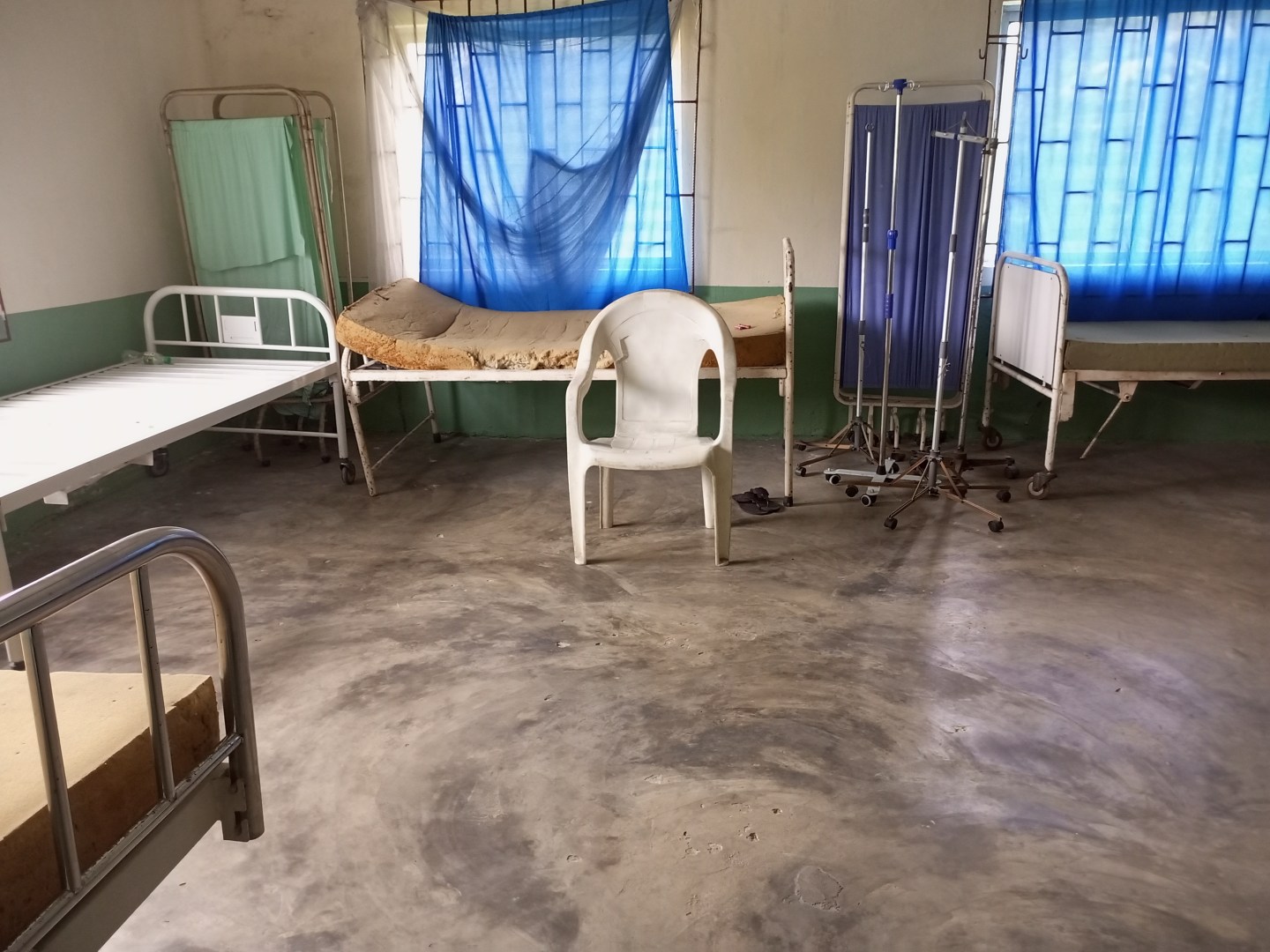
When contacted, Samuel Nteijah, the chairperson of Eastern Obolo LGA, acknowledged that the facility has no water and toilets, having visited during the cholera outbreak. Mr Nteijah said the facility’s challenges are worsened by the community being accessible only by water.
“If you want to do anything there, you must transfer materials from the upland in Okoroete, the council headquarters, by boat to that village. We are thinking of how to give them water,” he said.
Next to the PHC is a water project abandoned by the defunct Oil Mineral Producing Area Development Commission, now NDDC. Mr Nteijah said his administration plans to revamp the project.
Mr Nteijah said he was unaware of the other challenges, including staff shortages and mattresses, but added that his administration was recruiting “ad-hoc staff” for hospitals and primary schools to address the manpower shortage in health and education.
PHC collapse leads to preventable deaths – community leader

At Ikot Ukpong Obio Esse/Ikot Edah, in Oruk Anam Local Government Area, a skeletal framework of blocks is the remnant of what once was a place of healing and hope.
When PREMIUM TIMES visited the community on 1 June, the abandonment of the PHC was evident. Situated on the border between Rivers and Akwa Ibom, and accessed from the East-West Road, the facility had been ravaged by time, leaving only a rusted overhead water tank standing. This lone structure, resilient against storms and weather, is a painful reminder of the centre’s neglect and what has been lost.
“This place was the reception. The other one was the consulting room. Then that hall over there was a very long ward, equipped with beds and other facilities,” Elisha Brownson, a community resident, said, pointing fingers at the remains of the building inside the bush.
The PHC’s field, which served as a children’s playground, is now a cultivated farmland with cassava plants twirling in the wind. The ward, reception, and consulting room have been overtaken by grasses and trees, making it difficult to access due to the fear of reptiles.
‘My mother died for lack of hospital’
Lamenting the devastating impact of the collapsed hospital, Mr Brownson shared stories of the lives lost and the struggles of the indigent population left to fend for themselves as access to medical care became a distant luxury.
Residents seeking medical care at the General Hospital in Ikot Abasi, the nearest health facility to the community, face a significant transportation burden, with fares as much as N8,500. Again, this defeats the objectives of SDG 3 and universal health coverage.
“Everybody now depends on chemists,” he said, using a local name for patent medicine vendors. “The nearest hospital to this place is in Ikot Abasi. My mom died two years ago because a hospital like this was not present in the community.”
A youth leader in the community, Nsikan Marcus, and the chairperson of the village council, Daniel Akpabio, corroborated Mr Brownson’s claims of avoidable deaths in the community after the hospital’s collapse.

Expectant mothers taking herbal medicine – Akpabio
The hospital’s collapse not only took away access to medical care but also forced people, particularly expectant mothers, to rely on traditional medicine, often with uncertain outcomes, Mr Akpabio said.
He corroborated Mr Brownson’s concern that the indigent people pay through the nose to the nearest hospital in Ikot Abasi for medical care, stressing that, under emergencies, particularly at night, they pay between N7,000 and N8,000.
“The collapsed PHC is a death sentence for our people,” he said.
Mr Akpabio said he had just signed a letter to the Commissioner of Health, Ekem John, appealing to the state government to rebuild the collapsed hospital to save lives.

“I signed the letter yesterday. We want the state government to reconstruct the hospital to bring succour to, particularly, the pregnant women and the weak,” said Mr Akpabio, a person with disability.
“If I am sick, I buy drugs at the chemist. But if I want to go to the hospital, I go to the General Hospital at Ikot Abasi.”
Pregnant women, Mr Akpabio said, patronise Ekaete Godwin, a TBA in the community, for childbirth. “If our hospital is functional, expectant mothers would no longer patronise herbal medicine from traditional midwives,” Mr Akpabio said.


Mrs Godwin, a TBA with 25 years of experience, provides a lifeline for expectant mothers in the community. Her home, located near the collapsed PHC, welcomed a newborn just hours before this reporter’s visit. In the previous month, Mrs Godwin assisted in six deliveries.
The TBA combines herbal medicine with prayer and fasting to care for pregnant women. Having exhausted her supply, she now delivers without gloves and appeals for support, including an exclusive delivery apartment and essential medical supplies.
Her husband, Monday Godwin, said there were several expectant mothers under his wife’s care for childbirth.
“I had antenatal care in the hospital before coming here for delivery,” said Obongifiok Elisha, a new mother.
“She takes care of us. She massages pregnant women very well, gives us exercise every morning, and also organises prayers and offers us herbal medicine to take,” she said, adding that the newborn baby, a girl, was her second child.
Mr Godwin said that after learning that the government was planning to relocate the collapsed PHC, the community offered its Cooperative Hall for temporary use.
High mortality rates despite soaring revenue
The conditions of PHCs in Akwa Ibom State reflect the larger situation in Nigeria, posing a serious setback to the pursuit of SDG target 3.1—reducing maternal mortality to less than 70 deaths per 100,000 live births by 2030. The global maternity rate in 2023 was 197 per 100,000 live births.
Sub-Saharan Africa alone accounted for around 70 per cent of maternal deaths (182,000) in the world, according to the most recent UN estimates for the country, compiled from 2023 figures.
Nigeria accounted for over a quarter, 29 per cent, of global maternal deaths, indicating that one in 100 women dies in labour or the following days, making Africa’s most populous country, the world’s most dangerous place to give birth.
With a population of over seven million people, Akwa Ibom is currently the largest crude oil producer in the country, earning billions of naira in oil revenue.
Year after year, billions of naira are appropriated. Still, little is seen on the ground regarding how the money impacts lives and infrastructure, particularly in the PHCs, which are the closest to the people at the grassroots.
According to the state government’s annual financial reports, Akwa Ibom recorded a significant increase in revenue in the past five years: N206 billion in 2020; N340 billion in 2021; N444 billion in 2022; N456 billion in 2023, and a record-breaking N1.1 trillion in revenue in 2024.
Comparatively, the 2024 revenue of Akwa Ibom is almost equal to the total revenue of three other south-south states combined, Bayelsa (N480 billion), Cross River (N318 billion), and Edo (N460 billion), which sum up to N1.2 trillion, yet these states performed better in terms of healthcare indices.

Findings from the state budget show that the current administration has increased allocations to the health sector by over fourfold within two years compared to the last administration. However, poor fund releases distort this picture.
For instance, N2.2 billion was allocated to the sector in 2023, N6.1 billion in 2024, and N11.6 billion in 2025, indicating an increase of 427.3 per cent over two years. Amidst this increase, only N1 billion was released between January and September 2024.
While existing PHCs are understaffed and under-equipped, the state government, through its economic blueprint, Arise Agenda, is building 31 Model PHCs across the 31 LGAs in the state. According to data obtained from the 2025 budget, one of the PHCs already commissioned in Uyo cost N500 million, while another at Ikot Abasi was allocated N400 million.

Childhood mortality
Amidst the state’s huge oil revenue, trends in early childhood mortality rates in the South-south states indicate that Akwa Ibom is at the top of the table.
According to the 2023–24 Nigeria Demographic and Health Survey, Akwa Ibom has the highest neonatal and under-five mortality rates among the south-south states. This survey aligns with the findings of this investigation, in which health workers testified that expectant mothers only visit PHCs for antenatal care but have deliveries at traditional midwives.
The data shows that Akwa Ibom has a neonatal mortality rate of 38 per 1,000, indicating that one in every 26 newborns dies within the first month of life. The post-neonatal mortality rate of 17 per 1,000 indicates that one in every 59 newborns dies between the first month of life and the first birthday.
The state has an infant mortality rate of 56 per 1,000: one in every 18 newborns dies between birth and the first birthday. It has a child mortality rate of 25 per 1,000, an indication that one in every 40 newborns dies between the first and the fifth birthday, and an under-five mortality rate of 80 per 1,000, showing that one in every 13 newborns dies between birth and the fifth birthday.

Poor funding, weak governance challenges
A Public Health expert, Godwin Asuquo, highlighted inadequate funding, shortage of skilled workers, weak governance, brain drain, and inefficient drug procurement and supply as challenges facing PHCs in Akwa Ibom.
Mr Asuquo, the executive director of the Africa Centre for Health Leadership, a non-profit organisation, listed high out-of-pocket payments and the lack of community participation in the management of PHCs as another challenge facing the sector.
“When patients in the indigent communities are forced to pay high out-of-pocket costs, they may be deterred from seeking care, leading to delayed or foregone treatment, which can result in poorer health outcomes and increased mortality rates.”
Mr Asuquo said high out-of-pocket payments can lead to financial hardship for individuals and families, particularly those living in poverty.
To address the decay in the sector, Mr Asuquo urged the government to increase the health sector budget to meet the Abuja Declaration target of 15 per cent, prioritise PHC, and upgrade infrastructure through targeted investments in PHC facilities, especially in underserved areas.
“Recruit and retain health workers by improving salaries, incentives, and rural postings, strengthen coordination across all levels of government for unified PHC management and implementation, and implement national health insurance schemes effectively to reduce out-of-pocket spending,” he said.
On the role of civil society, the public health expert urged non-profits to advocate for increased government accountability and better health financing at all levels, monitor health service delivery using community scorecards, and report gaps to relevant authorities and mobilise local resources for basic improvements in PHCs.
The Executive Director of Better Life Initiative, Koko Udo, corroborated Mr Asuquo’s views, but added that the state government should make adequate and timely releases to the sector.
Mr Udo promised to engage the state government in advocacy to address the challenges facing the PHCs in the state when the outcome of this investigation is published.
A medical practitioner in the state, Ime Innokon, said if the PHCs function optimally, with doctors provided, they would restore pregnant women’s confidence in patronising PHCs during delivery.
“If doctors are provided accommodation and allowed to manage the PHCs, the situation will be improved compared to the one managed by nurses,” he said.
Akwa Ibom govt and TBAs
This investigation found that the TBAs have taken over the work of health workers at PHCs in rural communities.
At a TBA conference held in Uyo in March, Otobong George, the president of their association in the state, said they have over 4,000 registered members. Mr George cited inaccessibility to health care facilities as one of the factors that attracted expectant mothers to TBAs.
“I have been to some local government areas where there is no health centre in a particular village. When you find yourself in such a situation, it does not mean that people will not get married or give birth. The TBAs stand in where healthcare facilities are not accessible,” Mr George said at the event attended by the state governor, Umo Eno.
Mr George highlighted poverty as one of the reasons many patronise TBAs and wondered how a person who cannot afford three square meals a day can afford medical bills.
At the event, Governor Eno directed the Ministry of Health to train all the TBAs and post them to PHCs as healthcare workers. That has not been done as of the time of this report.
The governor said the state government’s health insurance scheme covers childbirth at an annual cost of N18,000. He urged traditional midwives to partner with the programme by becoming recruiting agencies and linking pregnant women to health facilities.
Akwa Ibom govt speaks on PHCs’ condition
When PREMIUM TIMES shared the findings of this investigation with the Commissioner for Health, Ekem John, he said the state government was already addressing some of them.

On the abandoned health centre in Ikot Ukpong Obio Esse, Mr John, who hails from a community close to the collapsed facility, said he had visited it.
He said work was ongoing on a Model Health Centre at the Ward Centre, Ikot Osute, about a five-minute ride to Ikot Ukpong Obio Esse. He argued that building another health centre close to the Model Health Centre made no sense.
“The village head called and I have told him we cannot build another PHC in the Ikot Ukpong Obio Esse when at the Ward Centre, Ikot Osute, the state government is building a Model Health Centre,” he said, stressing that the distance between the two communities can be covered in five minutes on a motorcycle.
Regarding the shortage of health workers in the PHCs visited, Mr John described it as a “global challenge”. Still, he stated that it would be addressed upon completing the recruitment of 1,000 health workers approved by the state government.
“We acknowledge that there are issues and are taking steps to resolve some of them. We may not be able to resolve all due to competing demands and interests. Still, we will try our best,” said Mr John, a former secretary of the Nigeria Medical Association in the state.
The commissioner promised to visit Odorikot and Emereoke to assess the PHCs. He also promised to post health workers to them after recruitment.
When he was drawn to the urgent need to provide a refrigerator in Odorikot PHC for vaccine storage, the commissioner said, “If it is not in this year’s budget, we can plan towards it next year,” and commended the newspaper for providing the feedback.
About three months after the commissioner was contacted and briefed on the conditions of PHCs in the state, the state government declared a state of emergency in the health sector, approving the employment of 2,000 health workers and recalling retired workers who are still fit to work back to service, among other measures.
This reporting was completed with the support of the Centre for Journalism Innovation and Development (CJID).
Page planned and prepared by Ezekiel Oyero.
Discover more from Premium Times Nigeria
Subscribe to get the latest posts sent to your email.

More News


