





There was one question in Zacch Adedeji’s Channels Television interview on Sunday, 9 August, that deserves to survive the noise around the interview.

“Anybody who says he is coming,” the Executive Chairman of the Nigeria Revenue Service said, “just ask them, ‘What will you do differently?’ It is not just saying buffer. Buffer as what?”

|

|
It was an arresting question. Perhaps it is more useful to turn it towards the government itself.
What can the Tinubu administration do differently now?
|
|
|
|---|
Some of the most consequential economic reforms of the past three years have already happened. The petrol subsidy was removed. The foreign exchange market has been substantially changed, tax administration has undergone a major overhaul and domestic refining has expanded. States are also beginning to take charge of regulating their electricity markets.
The World Bank says Nigeria has made meaningful progress in restoring macroeconomic stability, with inflation easing, external and fiscal positions strengthening, and economic growth remaining robust. But it also says household incomes have yet to recover fully and poverty remains high.


The IMF’s assessment is similar. It has commended the reforms for improving macroeconomic outcomes and building resilience, while noting that conditions remain difficult for many Nigerians, with poverty and food insecurity still severe.

Stay Ahead with Premium Times
Follow us on Google News and never miss breaking stories, investigations, and in-depth reporting.
 Add as a preferred source on Google
Adedeji’s argument about revenue illustrates the change. He said monthly Federation Account allocations had risen from around ₦700 billion when the administration came in to about ₦4.5 trillion today. The comparison needs caution because distributable revenue changes with oil receipts, exchange rates and other factors. But there is no doubt that the revenue pool has expanded substantially.
For states that once struggled to pay salaries, this creates considerably more room to act.
The same applies to tax revenue. Improved collection gives government greater fiscal capacity, but Nigeria remains a relatively low-tax economy. The challenge is to turn additional revenue into services, productive investment and social protection, without allowing the cost of government itself to grow unnecessarily.
The foreign exchange reform has also removed some of the most damaging distortions of the old system. When official and parallel-market rates were separated by an enormous margin, investors and businesses could not reliably determine the real cost of transactions. The greater market orientation of the exchange-rate regime has improved transparency, although the naira remains under pressure and the adjustment has imposed substantial costs.
In May, S&P Global Ratings upgraded Nigeria’s sovereign rating from B- to B, citing higher oil production, increased domestic refining capacity and the 2023 exchange-rate liberalisation as factors supporting stronger growth and balance-of-payments outcomes. It also noted a significant improvement in the debt-to-revenue trajectory.
Nigeria’s refining story offers perhaps the clearest example. For decades, the country exported crude oil and imported much of the petrol it consumed. The subsidy regime made it increasingly expensive and difficult to sustain. Removing the subsidy was painful, but it also changed the commercial environment in which domestic refining could become viable.
Adedeji said domestic refining capacity had risen from about 30,000 barrels per day in May 2023 to about 700,000 barrels per day, with Nigeria recording its first net petrol export in March.
The 700,000-barrel/day figure needs some qualification. The Dangote refinery, which accounts for much of the increase, reached that level during a performance test, above its stated 650,000-barrel-per-day capacity. The broader significance is that Nigeria now has a much larger domestic refining base than it had when the administration took office, and refined products are increasingly being supplied from within the country.
That is a major change, but refining capacity alone does not guarantee cheap petrol. Domestic crude supply, pricing, logistics and distribution still have to work. If refineries cannot obtain sufficient crude at workable prices, capacity on paper will not translate into reliable production on the ground.
The real test is whether domestic refining reduces the foreign exchange burden, creates industrial opportunities and lowers energy and transport costs.
The National Bureau of Statistics reported a real GDP growth of 3.89 per cent in the first quarter of 2026, up from 3.13 per cent in the corresponding quarter of 2025. Nigeria also recorded a merchandise trade surplus of ₦7.55 trillion in the first quarter.
Stronger external reserves have given the country a larger buffer against external shocks. The IMF put gross international reserves at US$46 billion at the end of 2025, up from US$40 billion a year earlier.
The harder question is when Nigerians will actually begin to feel these improvements.
This is precisely the point Dr Yemi Kale made in an article I wrote about last year, when I examined his observations alongside those of Dr Ngozi Okonjo-Iweala.
Kale’s point was that when economists describe an economy as “stable”, they do not necessarily mean that people are comfortable. Stability can mean that inflation, exchange rates and growth are no longer moving wildly in the wrong direction. It can mean that the boat has stopped rocking violently, while the passengers are still far from shore.
Okonjo-Iweala made a complementary point after meeting President Tinubu. She credited the President and his team for working hard to stabilise the economy, but immediately added that what Nigeria needed next was growth, alongside social protection to help people weather the hardship.
Those observations remain relevant. Stability is necessary, but the next stage of reform should be concerned with how ordinary Nigerians experience the changes.
The relevant numbers are not only GDP, reserves and revenue. They include food, transport, electricity and housing costs, small-business earnings, workers’ purchasing power and young people’s access to productive employment.
Dr Joe Abah’s intervention in the debate is useful, not because every suggestion he makes must necessarily be adopted, but because he brings the discussion back to the immediate cost of living.
His central argument is that increased government revenue should now create room for measures that reduce the pressure on households. There is a limit to how much fiscal adjustment an ordinary household can absorb before its resilience begins to disappear.
Food is the clearest example. The government does not control every food price, and it would be wrong to pretend that it does. Security problems, weather, transport costs, input prices, exchange rates, storage and market inefficiencies all feed into the final price of food.
Government can reduce some of those costs through better roads from farms to markets, more reliable electricity, storage, agricultural financing and more efficient freight. Reducing unnecessary import barriers during periods of severe supply pressure can also help.
The World Bank has identified food inflation as one of Nigeria’s most urgent problems and called for attention to trade barriers, agricultural inputs, security, logistics, power, storage and cold chains.
Infrastructure raises a similar question. The Electricity Act 2023 has opened a new phase in which states can regulate their own electricity markets. By May 2026, 15 states had transitioned to regulating their electricity markets.
Abia offers an instructive example. Governor Alex Otti’s administration adopted a state mini-grid regulatory framework in 2025 to encourage private investment in electricity generation and distribution for unserved and underserved communities.
A manufacturer needs electricity, as do a barber, a hospital and a cold-room operator. If reliable power reduces what businesses spend on diesel and petrol generators, the effect will be felt through lower production costs, more competitive businesses and potentially more jobs.
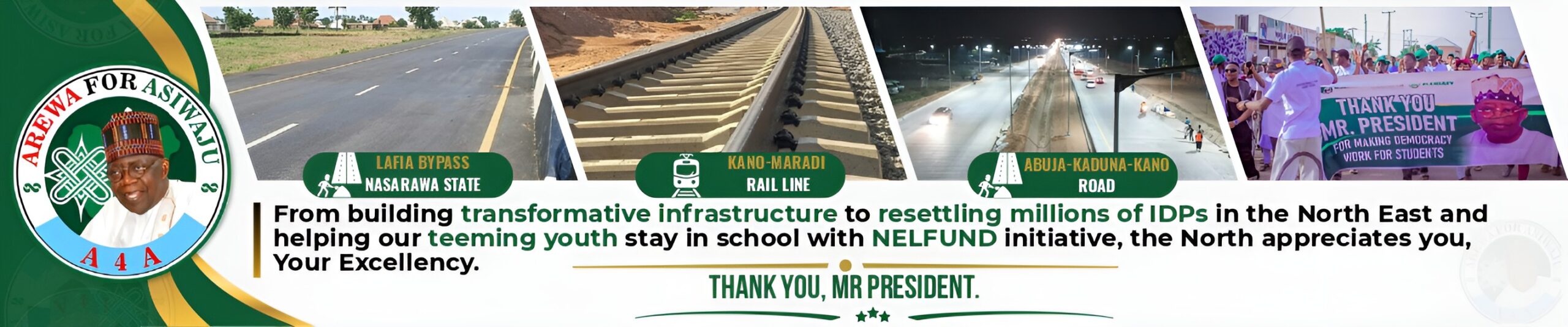
The Tinubu administration has embarked on major road, rail and power projects, with thousands of kilometres of federal highways under construction, reconstruction or rehabilitation.
These investments are necessary. Nigeria cannot grow a productive economy without infrastructure. But infrastructure policy also requires judgement about timing and priorities. A road becomes an economic asset when it reduces travel time, opens markets, lowers logistics costs or connects productive communities.
This is where Abah’s counsel about balancing long-term infrastructure with immediate household needs deserves consideration. The argument is not that Nigeria should stop building large roads. A country can build a major highway while millions remain unable to afford the journey.
The Nigerian Education Loan Fund offers another example. NELFUND says more than 1.5 million students across hundreds of tertiary institutions have benefited, with more than N282 billion disbursed.
The significance is that inability to pay immediately should not automatically mean inability to obtain higher education. But the longer-term test will be what happens afterwards.
Do students complete their studies? Do they acquire skills relevant to the economy? Can they find productive work? Can the loans be repaid without creating another burden?
A simple illustration of what “doing differently” could mean came recently from Oyo State.
At Agodi-Gate Market in Ibadan, Governor Seyi Makinde commissioned new lock-up shops, open stalls, a motor park and roads. He then directed that 177 roadside traders be moved into the new facilities free of charge.
The traders were already earning their livelihoods by the roadside. Government wanted to remove roadside trading because of the problems it created, but provided somewhere for them to continue their businesses.
That approach echoes an argument Makinde made earlier in his administration when discussing restrictions on commercial motorcycles. His position, as reported at the time, was that it would be morally wrong to impose a blanket prohibition without considering how those whose livelihoods depended on motorcycles would survive.
When government changes the rules of an economy, it must think about the people whose livelihoods depend on the old rules. That is what Nigeria’s wider reform programme requires.
Subsidy removal may have been economically necessary, but the taxi driver who now spends more on fuel is not thinking about fiscal reform. He is thinking about what is left of his daily earnings after filling the tank.
The foreign exchange reform may have corrected a damaging distortion, but the importer who needs dollars to bring in machinery still has to contend with what those dollars now cost.
Electricity tariffs may be moving towards a more sustainable market, but for the small business owner the immediate concern is still the amount on the electricity bill and what it does to the cost of keeping the business open.
A good reform can therefore produce a bad immediate experience if the transition is poorly managed. The challenge is to cushion people while the reform works its way through the economy.
The first phase was dominated by correction. The subsidy had to be addressed, the foreign exchange market repaired, revenue improved and the fiscal position made more credible.
The next phase should concentrate on what those corrections make possible — better public services, more investment, stronger energy security, reliable power, lower transport costs and a more skilled workforce.
The government also needs to make the connection between revenue and public value clearer.
If citizens are asked to pay more tax, they should be able to see what additional revenue is buying. If Federation Account allocations rise, states should demonstrate what the additional resources have achieved. If public borrowing finances infrastructure, the economic justification should be clear.
And if government asks citizens to tighten their belts, government must visibly demonstrate restraint in its own expenditure.
Abah’s point about the size and cost of government is relevant here. Reform also depends on whether citizens believe that those making the decisions understand the sacrifices being demanded.
Nigeria now has greater room to manoeuvre than it did three years ago. Revenue has improved, oil production has recovered, domestic refining has expanded, capital inflows have strengthened and the trade position has improved.
The opportunity is to use that stronger position to address what people feel most directly. These include food, transport, electricity, jobs, affordable credit, education and the quality of public services.
This brings Adedeji’s question back into the discussion. What can the government now do differently with the gains it has already secured?
The reforms have moved Nigeria some distance from the instability that made them necessary. The next job is to make people who have carried much of the burden feel some of that improvement.
Remi Ladigbolu is a journalist based in Lagos.
Discover more from Premium Times Nigeria
Subscribe to get the latest posts sent to your email.

More News


